Feb-16-2025
If you are sourcing windows and doors for a new build, a renovation, or a commercial project overseas, you have probably heard the term “aluminum alloy” dozens of times. But what does it actually mean for the frames you are buying? At FRAME, we machine, assemble, and ship aluminum windows, aluminum doors, curtain walls, and related facade systems every day. This guide explains what matters in the material, the profile, the glass, the hardware, and the finish — so you can compare products like a professional.
Pure aluminum is soft and light. To make it strong enough for a window frame, manufacturers blend it with small amounts of magnesium, silicon, and sometimes copper. The result is an aluminum alloy: still lightweight and corrosion-resistant, but rigid enough to hold large glass panels and resist wind loads.
The most common grades for door and window frames are 6063-T5 and 6063-T6. The 6063 part describes the chemical mix; T5 and T6 describe the heat treatment. T6 is slightly stronger, T5 is easier to extrude into complex hollow profiles, and both are standard for quality fenestration worldwide. At FRAME, we select the grade according to the project wind-load calculation and local building code.
The raw alloy is heated and pushed through a steel die to create long extrusions with the exact hollow shape needed for glazing, drainage, hardware pockets, and thermal breaks. This extrusion process is what makes aluminum alloy so flexible for architects: the same base material can become a slim residential window, a heavy-duty curtain wall mullion, or a folding door frame.
A finished aluminum window looks simple, but it is a system of engineered parts:
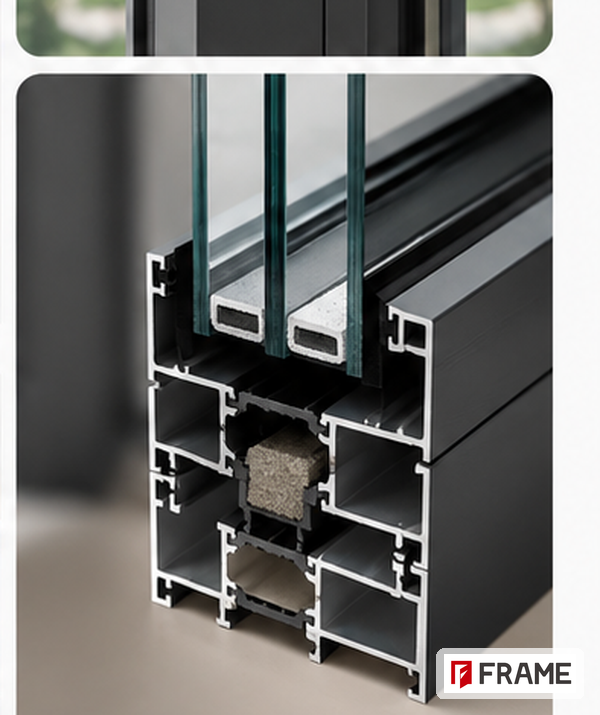
When these parts are designed as a matched system, the window performs as a whole. Mixing random profiles, glass, and hardware usually reduces weather-tightness and durability.
Aluminum conducts heat quickly. In very hot or cold climates, a solid aluminum frame would let indoor comfort leak straight outside. A thermal break solves this by cutting the frame into two aluminum shells and joining them with a low-conductivity polyamide strip.
The polyamide bridge is typically reinforced with glass fiber and shaped to fit the cavity. It reduces heat transfer through the frame by up to 1,000 times compared with bare aluminum. That is why thermal-break aluminum windows are standard for energy-efficient buildings in Europe, North America, Australia, and the Middle East.
FRAME extrudes both non-thermal and thermal-break aluminum windows and door profiles. We recommend thermal break for any project where air conditioning or heating runs for part of the year. It lowers energy bills, reduces condensation on the indoor frame surface, and helps the building meet stricter insulation codes.
The glass does most of the thermal and acoustic work. A typical specification includes:
For tropical or coastal sites, we often specify toughened outer lites and warm-edge spacers to resist salt, heat, and humidity over the long term. Acoustic laminated glass is another popular upgrade for hotels, schools, and homes near busy roads, because the interlayer dampens sound vibration while also improving security.
The finish protects the alloy and gives the window its color. Three finishes dominate the market:
Wood-grain transfer finishes are also available on aluminum profiles, giving the warm look of timber without the maintenance. When we quote a project, we match the finish class to the environment: powder coating for most residential and light commercial work, anodizing for premium interiors, and PVDF for high-rise or extreme-UV locations.
Aluminum alloy is versatile enough to form almost any opening type. The right choice depends on ventilation, space, security, and view.
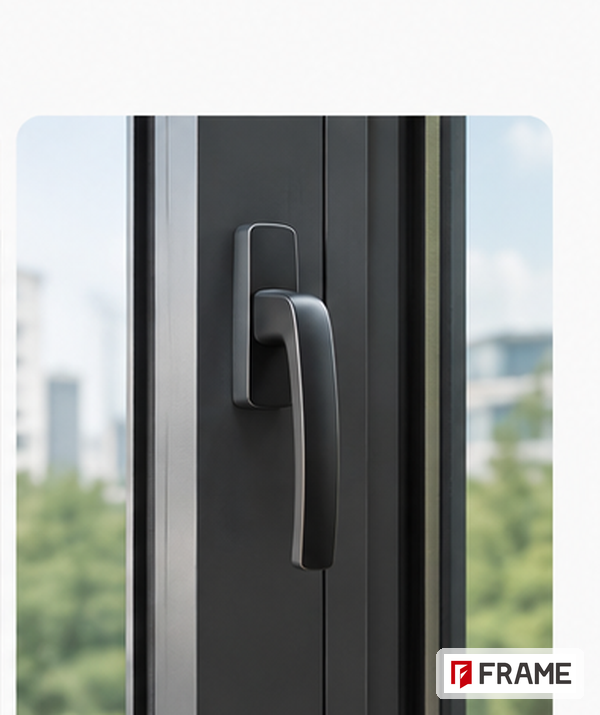
FRAME produces all of these configurations in custom sizes and can match the same finish across operable and fixed units for a consistent facade.
Good hardware is the difference between a window that feels solid for fifteen years and one that becomes loose after two. Look for:
We source branded hardware from European and Chinese suppliers such as ROTO, Siegenia, Kinlong, and HOPO, depending on the project budget and certification requirements.
Aluminum alloy frames can support very large glass panels if the profile design and wall thickness are right. The key variables are profile depth, number of internal chambers, and aluminum wall thickness. Thicker walls and more chambers improve stiffness without adding much weight.
For high-rise buildings or hurricane zones, FRAME engineers calculate wind load and deflection limits before finalizing the profile. In demanding cases we increase profile depth, add reinforcing steel inside the cavity, or specify laminated glass to handle pressure loads safely.
Each material has its place. Aluminum alloy is the middle-to-high performance choice when you need slim sightlines, structural strength, and long service life.
Many of our projects combine materials — for example, aluminum exterior cladding on a timber core, or thermally broken aluminum with wood-grain finish for a warm internal look.
Every production batch at FRAME goes through a structured inspection process:
Once units pass inspection, they are wrapped in protective film, edge-protected with foam, and loaded on custom racks or plywood boxes for sea or air freight. We document each stage and can provide inspection reports, mill certificates, and third-party test reports for export projects that need them.
Before you request a quote, gather the basics: project location, opening sizes, wind zone, required U-value or SHGC, operation style, color, and hardware level. With that information, we can recommend the right profile series, glass build-up, and finish for each elevation.
If you are comparing suppliers, ask these questions: What alloy grade is used? Is the profile thermally broken? What glass configuration is included? Where is the hardware from? What surface finish warranty is offered? A supplier who answers clearly is usually easier to work with over a multi-month project.
Contact FRAME today to discuss your aluminum alloy door and window requirements. We will review your specifications, suggest the right system, and prepare a clear quotation for your project.