Jan-09-2025
For architects, contractors, and developers sourcing aluminum doors and windows: if you confuse grilles with muntins, or muntins with mullions, you will end up with the wrong quote, the wrong structural calculation, and often the wrong aesthetic. This guide explains how each element works, when to use it, and what to specify.
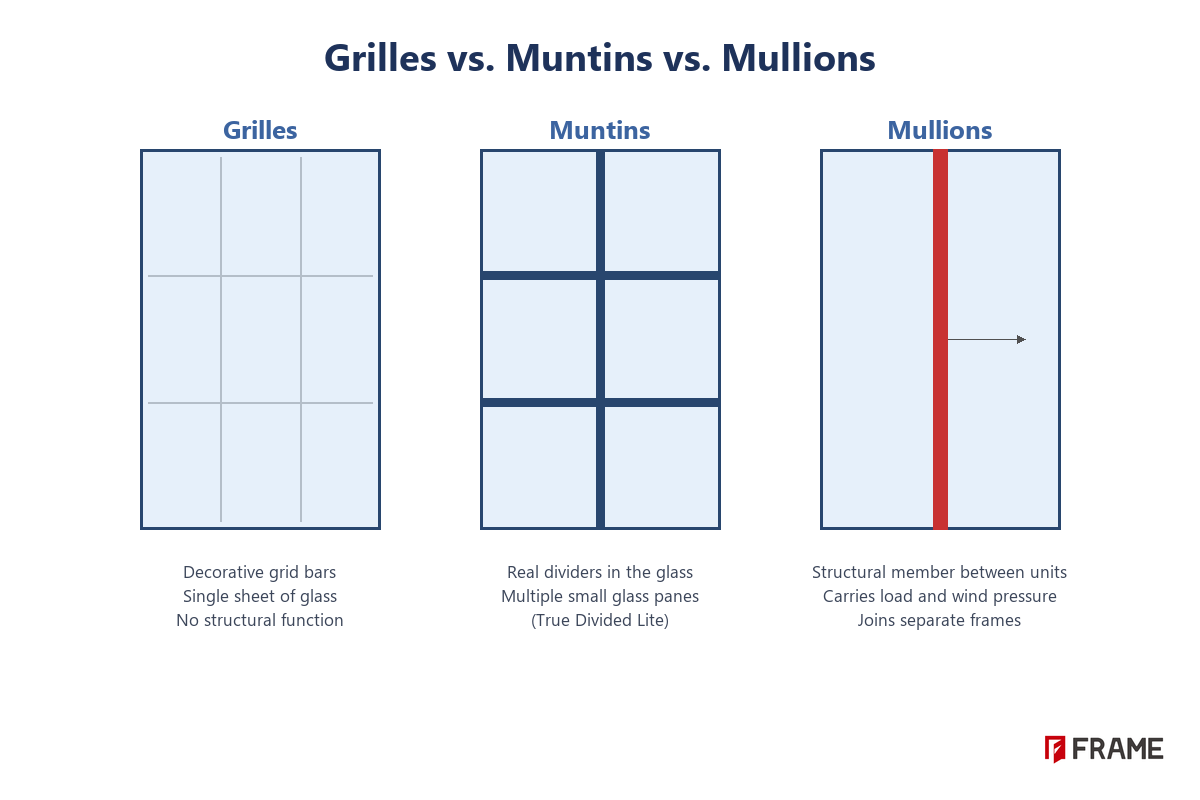
In aluminum window and door design, grilles, muntins, and mullions are three completely different components, even though the words are often mixed up in casual conversation.
Knowing which one your project actually needs changes the glass specification, the frame engineering, the price, and the long-term maintenance.
Grilles exist only for appearance. They let a single large sheet of glass look like a Georgian window, a French door, or a traditional casement without sacrificing the thermal and acoustic benefits of modern glazing.
We produce three grille formats for aluminum doors and windows:
Common grille bar widths are 8 mm, 18 mm, 25 mm, and 38 mm. Width choice changes the character of the window: 8 mm looks refined and modern, 38 mm looks heavy and colonial. The spacing pattern is usually specified as an even grid or as a custom colonial pattern. We machine the mounting clips from 6063-T5 aluminum and powder-coat them with the same lot as the frame so the color match is consistent.
A muntin is a real structural divider. In a true divided-lite (TDL) window, the sash is divided into separate small panes of glass, each held by its own frame and glazing bead. This was necessary in the age of hand-blown glass, but today it is usually a deliberate aesthetic or heritage choice.
The trade-offs of real muntins are significant:
We still supply TDL muntins for restoration projects, listed buildings, and clients who want the authentic divided-pane feel. For aluminum systems, we typically use a 20 mm × 25 mm extruded aluminum bar with an integrated glazing bead, matched to the frame finish. If the project needs heritage approval, we can also supply slim steel-look bars with thermal isolation breaks.
A mullion is not decoration. It is the vertical frame member that joins two separate window or door units into one larger opening. In a two-panel sliding window, the vertical frame between the fixed and sliding sash is a mullion. In a four-panel curtain wall module, the vertical millions carry the dead load of the glass above and transfer wind loads to the building structure.
This is where engineering matters. A mullion must be sized for:
For standard aluminum windows and doors we use 6063-T5 extrusions. For heavy structural mullions in curtain walls or large facades, we switch to 6061-T6 for its higher strength. Every mullion receives a PA66 GF25 thermal break and EPDM seals before assembly.
The choice between grilles and muntins changes more than appearance.
Energy efficiency. A plain IGU with low-E coating and argon fill performs best. Between-the-glass grilles have almost no effect because they sit inside the sealed cavity. Surface grilles cast minor shadows but do not change U-value. Muntins create real thermal bridges and reduce the available glazing thickness.
Cleaning and maintenance. Between-the-glass grilles are maintenance-free. Surface grilles need the same occasional cleaning as the frame. Real muntins have many small edges where dirt collects.
Security. Grilles do not improve security. Some surface grille systems can be pried off if they are only taped. If security bars are needed, specify a separate security grille system with tamper-proof fixings.
Sound insulation. Grilles have no measurable acoustic effect. Muntins break large panes into smaller ones, which slightly changes vibration modes but is rarely the deciding factor.
Most grille and muntin bars in our aluminum systems are extruded from 6063-T5 alloy. This gives a clean surface for powder coating and enough strength for normal bar lengths. For mullions that carry larger loads, we move to 6061-T6 and sometimes reinforce with internal steel plates.
Finish options include:
When grilles are clipped rather than bonded, the clips must be the same alloy and finish as the bar. Dissimilar metals set up galvanic corrosion, especially in humid or coastal climates.
Caribbean residence, Guyana territory. The client wanted a French-door look for the ground-floor living room but needed aluminum for termite and salt-air resistance. We supplied aluminum French casement doors with between-the-glass grilles in a 25 mm bar width, finished in matte black RAL 9005. The grilles give the colonial aesthetic; the single IGU behind them gives the thermal performance required in that climate.
Bulgarian mountain lodge, Europe. A restoration project required the new windows to read as true divided panes from the exterior for heritage review. We used simulated divided lites with exterior 18 mm bars and interior shadow bars, installed on triple-glazed thermal break aluminum casement windows. The exterior reads historically; the interior is clean and high-performing.
Maldives boutique hotel. The facade design used four tall aluminum window units stacked vertically to create one 6-meter-high glazed wall. The vertical mullion between units had to carry the dead load of four glass panels and resist wind pressure from the open ocean. We sized the mullion in 6061-T6, added drainage paths, and used marine-grade EPDM seals. The grilles inside the units were between-the-glass, so housekeeping could wipe the glass without navigating bars.
When you send a grille, muntin, or mullion requirement, include at least these items:
Need help specifying grilles, muntins, or mullions? Send us your opening sizes, grid pattern, and project location. We will recommend the right bar type, finish, and frame reinforcement and courier a sample bar if you need to check the color and profile before production.
Grilles, muntins, and mullions are not interchangeable. Grilles give you the look of divided glass without the cost and thermal penalty. Muntins divide the glass for real, usually for heritage or high-end authenticity. Mullions carry loads and join separate units into larger openings. Specify the right one, and your facade will look correct, perform correctly, and cost what it should.
For aluminum windows, aluminum window systems, aluminum sliding windows, thermal break casement windows, aluminum sliding doors, and glass curtain walls, contact FRAME’s export team for drawings, samples, and a project-specific quotation.
— Written by the FRAME technical team. Last updated August 2026.