Apr-09-2025
The first time a conservation officer walked onto one of our sites in Bulgaria and mistook our slim-framed heritage doors for original 1920s steelwork, the architect on the job smiled. That is the point of a heritage aluminum system: it has to pass the eye test from a distance, then quietly outperform everything it is pretending to be.
FRAME’s heritage doors and windows are built around a simple idea. Take the narrow sightlines, deep glazing bars and crisp mechanical detail that make Crittall-style steel frames so recognisable, and manufacture them in modern, thermally broken aluminum. The result looks like steel, feels like a piece of architectural history, but behaves like a 21st-century window or door system. We spell it “aluminum” for the UK, Europe and Commonwealth markets; clients in North America will see the same product listed as “aluminum heritage doors and windows”. The material is the same, only the spelling changes.
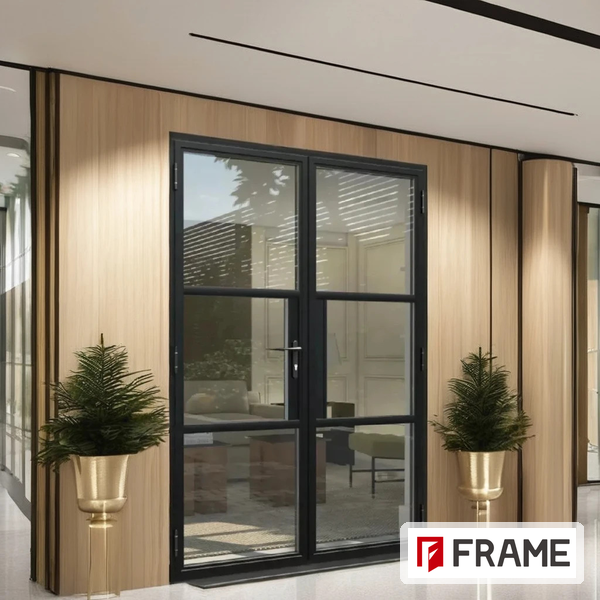
Heritage is not a formal certification. It is a visual language. A heritage-style door or window borrows the detailing of industrial steel joinery from the late 19th and early 20th centuries: slim vertical and horizontal glazing bars, a strong rectangular grid, matte or low-sheen metal finishes, and hardware that sits flush rather than proud of the frame.
The goal is to complement brick, stone, timber or render elevations where bulky modern PVCu or wide aluminum profiles would look out of place. Conservation areas and listed-building projects are the obvious homes for the style, but we also see strong demand from self-builders and developers who want a period character without the period maintenance bill.
There is an important distinction between a heritage replica and a cheap imitation. A replica gets the proportions right: the width of the glazing bars, the depth of the external face, the way the transom and mullion lines read from the street. An imitation only copies the color and adds decorative stick-on bars. FRAME’s heritage systems are replicas in that stricter sense. The grids are integral to the frame, not applied afterwards.
Original steel windows are beautiful, but they are also cold bridges. Solid steel conducts heat straight through the frame, which is why old industrial buildings with steel windows are draughty. Painted steel needs regular maintenance, and once corrosion starts in a hidden rebate it is difficult to stop.
Aluminum solves those problems while keeping the look. A thermally broken aluminum profile separates the internal and external faces with a low-conductivity polyamide barrier. That barrier cuts heat transfer dramatically. On our heritage range, combined with double-glazed units, the system reaches U-values as low as 1.4 W/m²K, comfortably inside the thresholds required by most current building regulations.
Other practical differences matter on site too:
Our standard heritage doors and windows are offered in a controlled palette that matches the period references: anthracite gray and black. Both colours read as metal rather than plastic, which is what makes the illusion convincing from the pavement or garden.
Standard details include:
Because the base system is aluminum, we can produce larger leaves and wider fixed lights than would be sensible in true steel, while still carrying the same visual proportions.
Energy efficiency is no longer optional on renovation or new-build work. FRAME’s heritage aluminum systems use polyamide thermal breaks and factory-glazed double units. The combination keeps internal frame surfaces closer to room temperature, which reduces condensation risk and improves comfort near the opening.
For security, every operable door is fitted with a multi-point locking system and toughened glazing. That gives the same level of protection you would expect from a contemporary entrance door, just wrapped in a heritage aesthetic.
A good heritage specification is not just about color. The following details determine whether the finished installation looks convincing or looks like a modern window painted black:
Getting these details right at specification stage saves awkward conversations on site later.
We have seen the same errors repeat across projects in different countries. Most are easy to avoid if they are caught early:
We have shipped heritage-style aluminum doors and windows to three very different types of project:
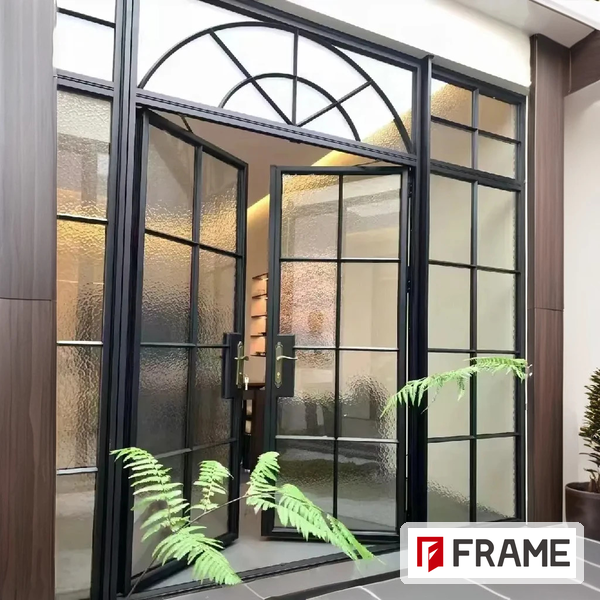
Each FRAME heritage door and window is supplied with the hardware factory-fitted and the glazing packed separately. There is a good reason for this: aluminum is light, but glass is heavy. Keeping the two apart until the frame is fixed in place makes handling safer on tight sites and reduces the chance of damaging a finished floor.
Our team can supply only, or supply and install, depending on the contract structure. For overseas projects we have worked with local installers we have trained, or we can send our own site team for larger schemes. Drawings, schedules and fixing details are issued ahead of delivery so the builder has clear instructions before the crates arrive.
No. “Aluminum” is the British and international spelling; “aluminum” is the North American spelling. FRAME uses the same extrusions, thermal breaks and finishes regardless of the spelling on the drawing.
In most cases, yes. The critical issue is sightline proportion, bar width and finish. FRAME’s heritage profiles are designed specifically to read as steel from the outside, which is what conservation officers are usually looking for.
The heritage range is most commonly specified in anthracite gray or black. Both colours support the steel-look aesthetic. Other RAL colours can be discussed for volume orders.
Yes. We regularly deliver to Europe, the Caribbean and the South Pacific. Packing and documentation are handled in-house so the product arrives site-ready.
If you are specifying steel-look doors or windows for a listed building, conservation project, renovation or new development, send us the drawings. We will review the openings, propose a heritage aluminum system that meets your thermal and security requirements, and issue a fixed quotation with delivery dates.
Contact FRAME today to discuss heritage aluminum doors and windows for your next project.