
Oct-11-2026
When you plan a window order, one decision shapes everything else: the frame material. The two common choices for residential and light-commercial projects are aluminum and UPVC (often called vinyl). Neither is “wrong” — they trade off differently on strength, insulation, upkeep, and look. This guide lays out the difference so you can specify the right one per opening.
Aluminum frames use extruded 6063-T5/T6 alloy profiles, finished by anodizing, powder-coating (minimum local thickness ≥40μm, per GB/T 5237.4), or fluorocarbon coating (two-coat ≥30μm, three-coat ≥40μm, four-coat ≥65μm, per GB/T 5237.5). UPVC frames use unplasticized polyvinyl chloride — a rigid plastic profile, usually with a steel reinforcement inside and multi-chamber walls for stiffness.
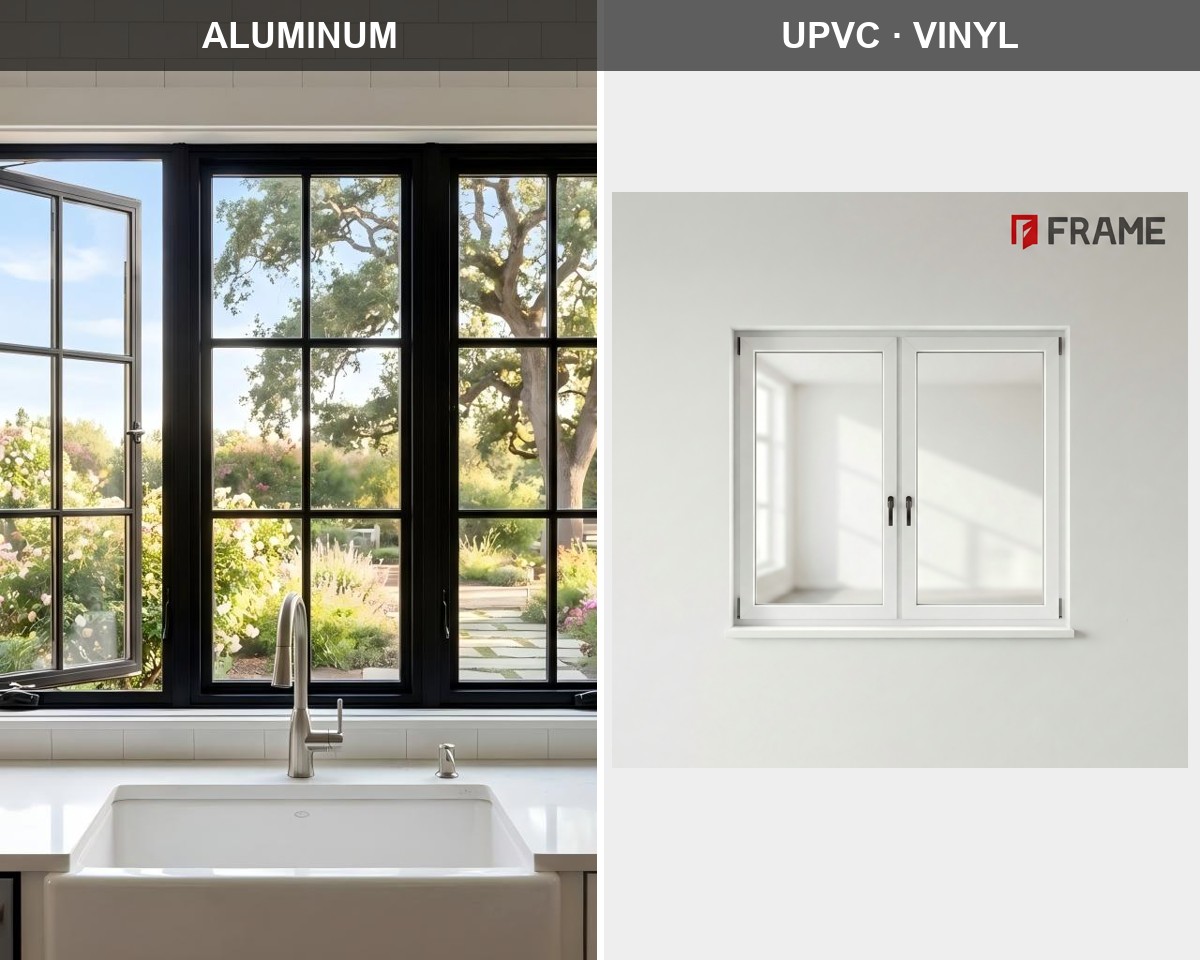
Aluminum is the stronger of the two. Its rigidity lets you build larger, slimmer openings and tall curtain-wall spans without bulky frames, and it holds up in high-rise and wind-exposed sites. Our thermal-break aluminum systems use insulated profiles with a shear strength of at least 24 N/mm (GB/T 5237.6). UPVC is rigid enough for standard windows but becomes heavy and less stable at very large sizes, so it is usually specified for typical residential openings.
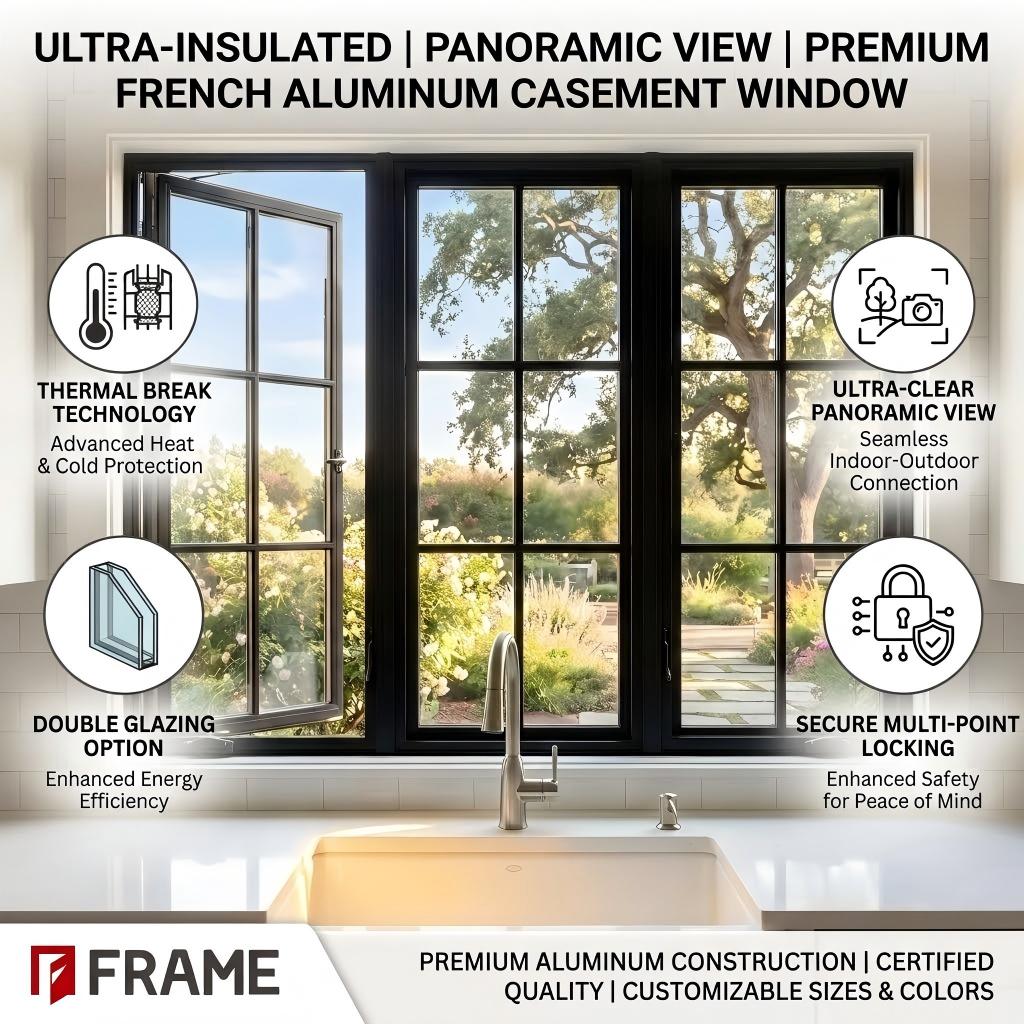
This is the classic trade-off. PVC is a poor conductor of heat, so a UPVC window insulates well by nature. Bare aluminum is a good conductor, so a non-thermal-break aluminum window loses more heat through the frame. The practical answer is a thermal-break aluminum window: a non-metal barrier is inserted between the inner and outer profiles, which narrows the gap substantially while keeping aluminum’s strength. Our thermal-break window systems reach whole-window ratings of thermal insulation class 8, air-tightness class 8, water-tightness class 6, and wind-pressure resistance class 9.
Both are low-maintenance compared with timber. Aluminum takes a durable factory finish — powder-coat or fluorocarbon — that resists corrosion, fading, and salt air, which makes it a sound choice for coastal and humid climates; the metal will not rot, swell, or warp. UPVC needs little painting and shrugs off moisture, but it can soften or distort under sustained extreme heat and its surface can chalk over many years of sun exposure.
Aluminum wins on finish range: powder-coat and fluorocarbon come in the full RAL color system, plus anodized tones, so the frame can match a brand or a facade exactly. UPVC is mostly produced in white or a limited set of laminated woodgrain foils, which suits traditional homes but gives less freedom for a precise color match.
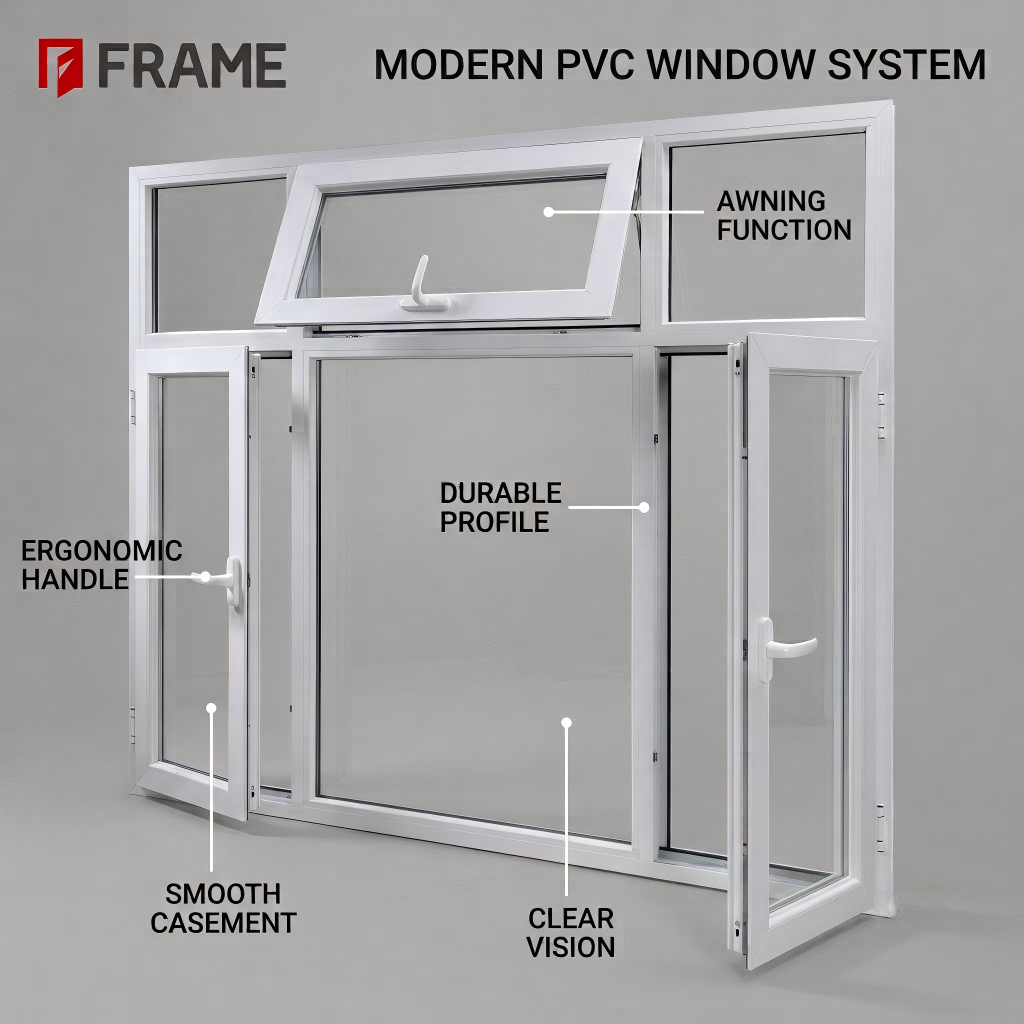
UPVC is generally the lower-cost option upfront, which is why it dominates budget residential retrofits. Aluminum costs more per unit but carries a longer service life and keeps its appearance, which matters for buildings where the facade is a long-term asset.
Choose UPVC when the priority is lowest cost on standard-size home windows in a mild climate, and a white or woodgrain look is acceptable. Choose aluminum when you need large or slim openings, a specific color, coastal/hi-rise durability, or a unified facade across a project. For many buildings the answer is mixed — aluminum on the street facade, UPVC on secondary openings — and that is straightforward to coordinate with one supplier.
FRAME manufactures both aluminum and UPVC windows and doors, built to order per your schedule and finish. Send your opening sizes and the performance target for each elevation and we return a matched quotation.
Do you manufacture both aluminum and UPVC windows?
Yes. FRAME supplies both aluminum and UPVC/PVC windows and doors, built to order per project.
Which performs better in hurricane or coastal regions?
Aluminum. Our thermal-break aluminum systems are rated to wind-pressure resistance class 9 and water-tightness class 6, and the metal does not rot, swell, or corrode in salt air — with a marine-grade finish it suits coastal sites.
Which insulates better, aluminum or UPVC?
UPVC insulates better by material nature, because PVC is a poor heat conductor while aluminum is a good one. A thermal-break aluminum window inserts an insulating barrier and narrows the gap substantially while keeping aluminum’s strength advantage.
Talk to the FRAME team
Gloria — Sales 1
WhatsApp / WeChat: +86 152 2227 1818
Email: gloria@alloyframemaster.com
Lyra — Sales 2
WhatsApp / WeChat: +86 155 1095 9890
Email: lyra@alloyframemaster.com
Company Email: frame@alloyframemaster.com

