Jan-22-2026
Walk into most window showrooms and you will see the same two colors on the wall: black and white. Salespeople push them because they are safe, they move fast, and they hide minor scratches. For a small apartment renovation, that is fine. For a villa, a boutique hotel, or a facade that needs to stand out for the next twenty years, safe is the wrong choice.
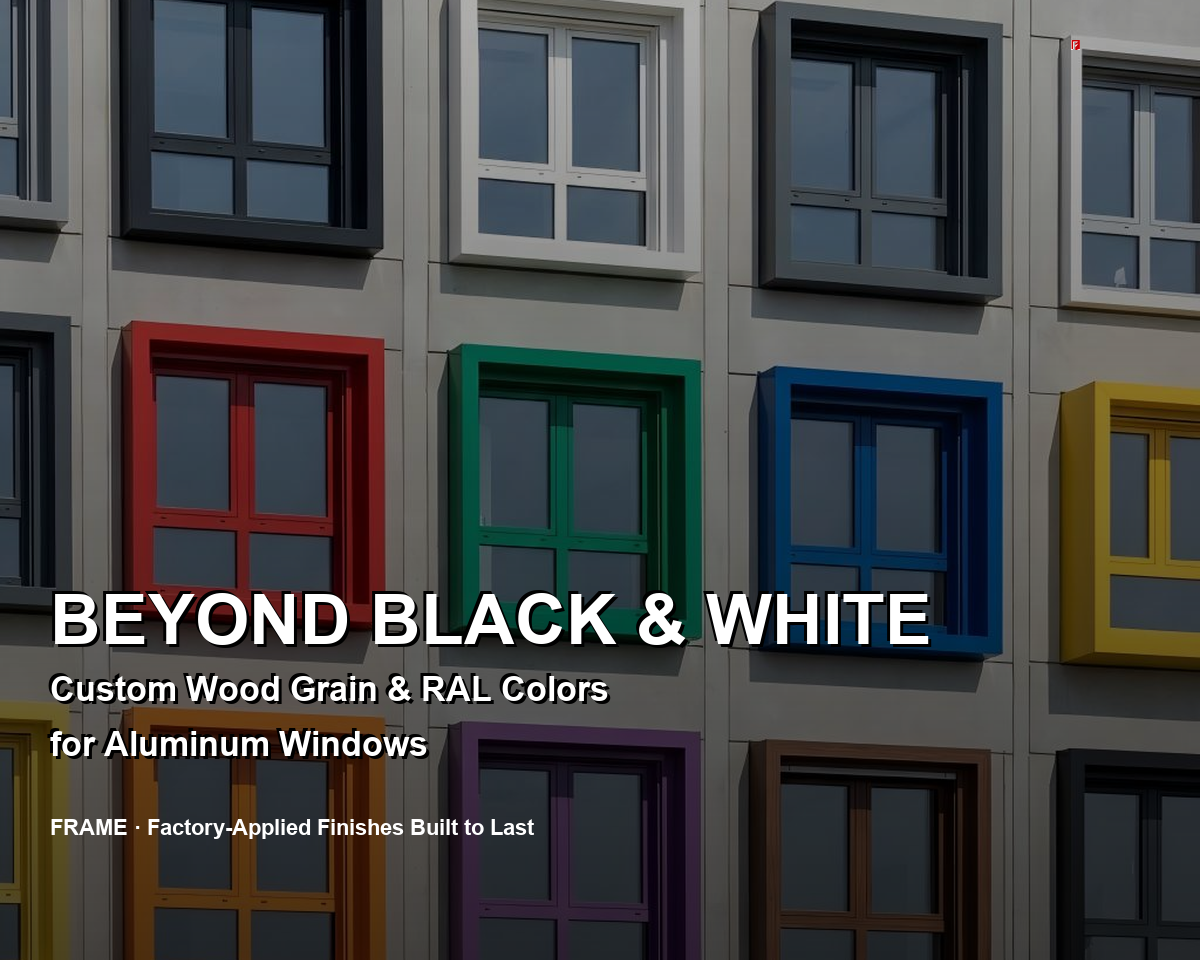
Color is not decoration. On aluminum windows and doors, the finish determines how the building ages, how the frames read against glass and stone, and whether the joinery looks bespoke or off-the-shelf. At FRAME, we run wood grain transfer lines and powder coating booths daily for export projects across Europe, the Americas, and the Pacific islands. This guide explains how we move projects beyond the default black-and-white palette into custom wood grains and RAL colors that are factory-applied, warrantied, and built to last.
Black powder coating and white polyester paint are stocked in volume by almost every aluminum extrusion factory. They are easy to match between batches, they tolerate minor surface flaws, and if a project is cancelled the frames can usually be resold. That is why they are cheap.
The problem starts when the same finishes are sold as “premium.” A matte black frame on a south-facing facade will run hot in summer, accelerating thermal expansion at the corners. A pure white frame in a coastal project shows dirt, salt, and sealant residue within two years. Neither is bad. Neither is special. They are defaults, and defaults are rarely the best answer for a custom project.
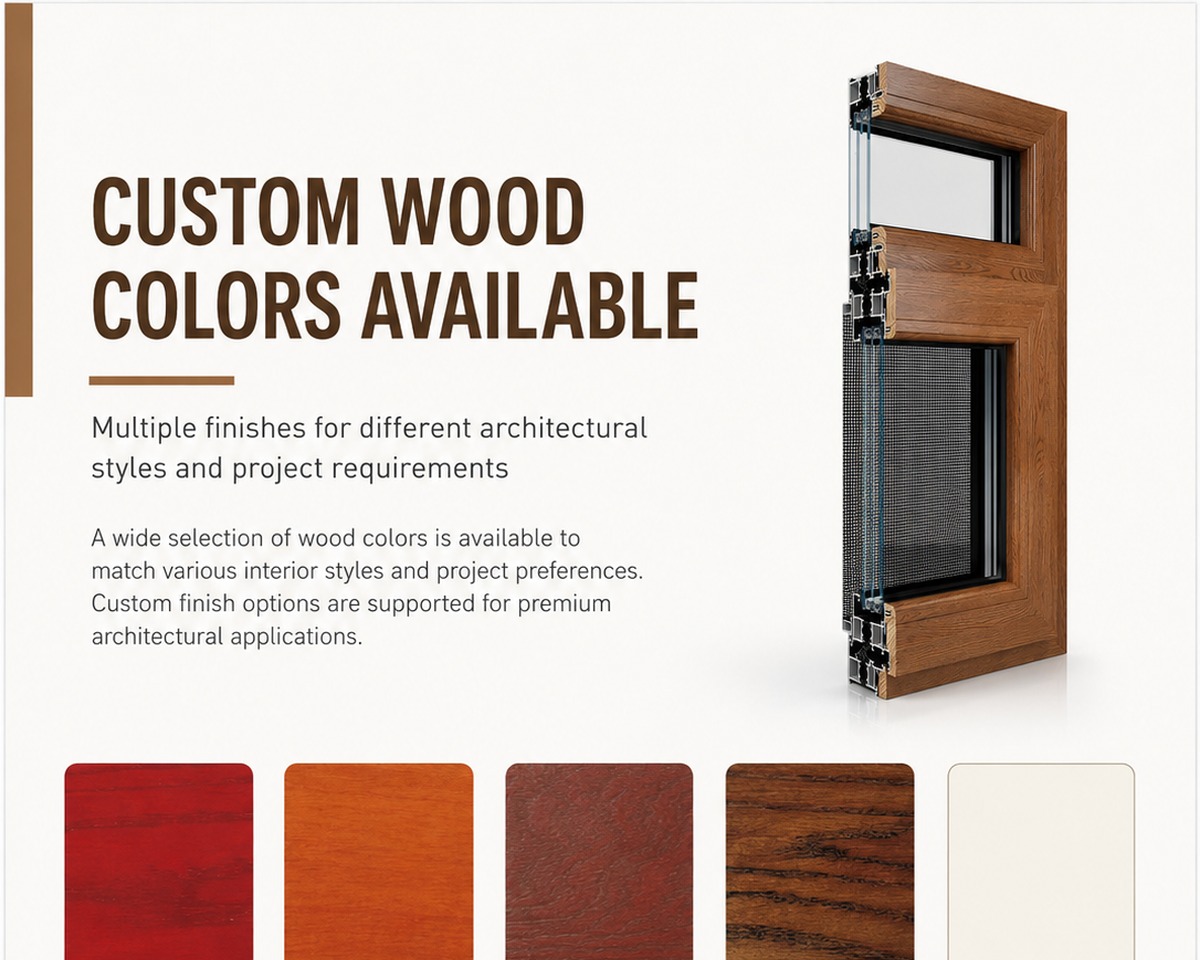
Real timber windows age beautifully for about five years. After that, the cycle begins: sanding, sealing, repainting, checking for rot, and eventually replacing the sashes. In tropical or humid climates the cycle is shorter. We still get inquiries every week from architects who want the warmth of oak or walnut but cannot accept the upkeep.
Our wood grain aluminum is produced by thermal sublimation transfer. The aluminum profile is first powder-coated in a base color, usually a light brown or beige. A printed PET film carrying the wood pattern is wrapped tightly around the profile, and the assembly is heated in a vacuum oven. At around 200 °C the ink on the film turns to gas and bonds into the powder coat beneath it. The film is then peeled away, leaving the grain embedded in the surface.
The result is not a sticker. It is a fused layer that:
Common requests we see include golden oak for Mediterranean villas, dark walnut for classical restorations, and gray-washed ash for Scandinavian-style new builds. If the project needs a specific species, we can source a matching film or produce a custom print from a high-resolution sample. These finishes are available across our aluminum casement windows, sliding windows, and entrance doors ranges.
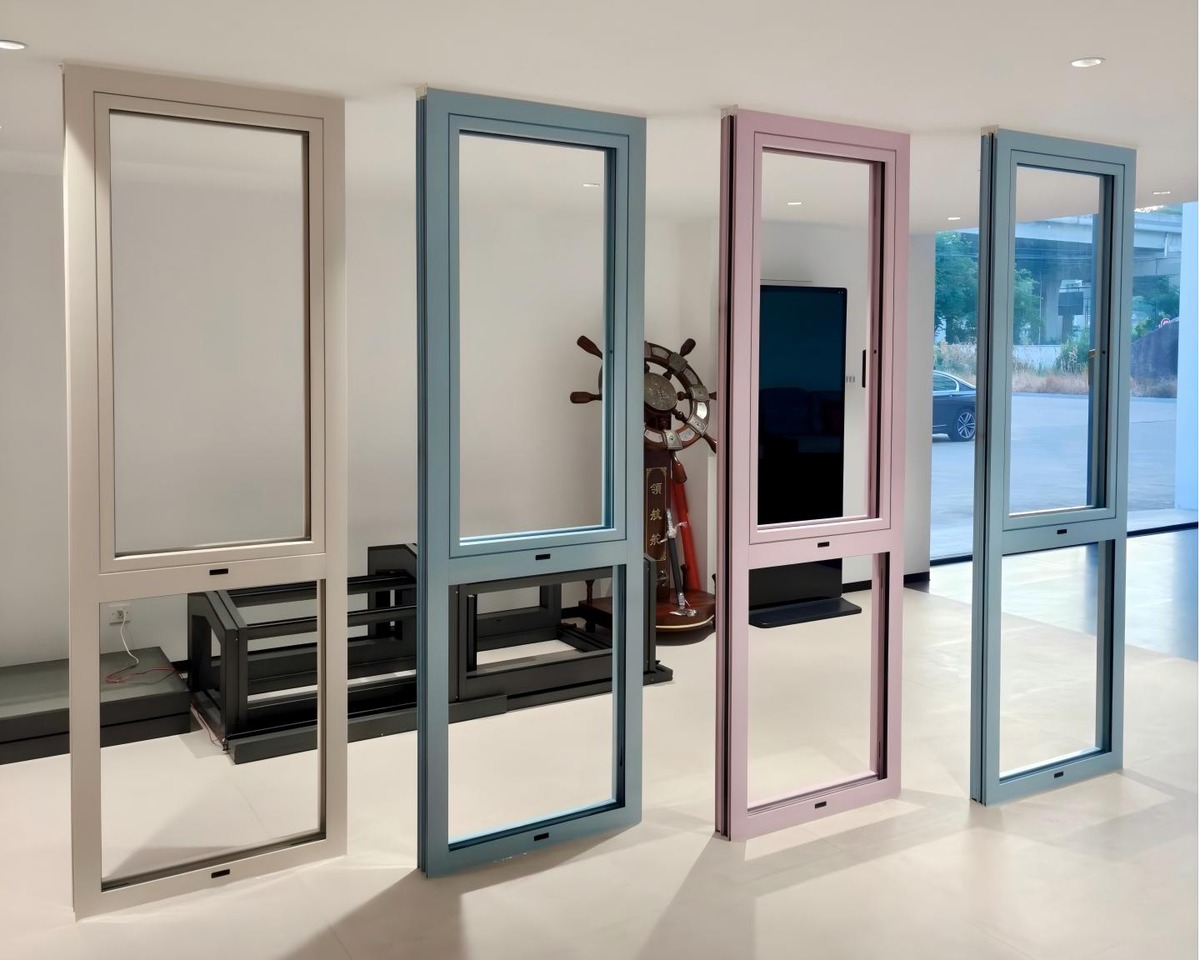
When a design calls for a precise tone, RAL is the only honest answer. The RAL Classic system assigns a four-digit code to over 200 colors, and the RAL Design system adds a broader spectrum for architects who need to match brand colors, interior palettes, or landscape tones.
We powder coat rather than wet spray. The process is electrostatic: charged dry powder is sprayed onto the grounded aluminum, then the profile passes through a curing oven where the powder melts and flows into a continuous skin. Compared to liquid paint, powder coating gives:
For clients who want something softer than a factory RAL code, we also keep a palette of Macaron pastels, matte metallics, and fine-texture finishes. These are not standard catalog colors; they are developed from project feedback over the last few years and work particularly well for kindergartens, showrooms, hospitality fit-outs, and high-end residential schemes.
A single custom color sounds expensive because it is. The factory has to clean the powder line, load a new color, run test panels, and discard the first few meters until the shade stabilizes. That setup cost has to be recovered somewhere.
Once the order reaches roughly a full container of profiles, the setup cost is spread across enough meters that the per-kilogram premium often disappears. For wood grain transfer, the same rule applies: a small run pays heavily for film setup and oven scheduling, while a production run of several hundred square meters absorbs it.
Our standard approach is to quote three finish options:
This keeps the conversation honest. If a client only needs twelve windows in a custom burgundy, we warn them. If they need three hundred, we show them the numbers.
A colored frame can look cheap if the glass and hardware fight it. We have seen beautiful forest-green frames ruined by silver hinges and bright-blue Low-E reflections. The best results come from treating the window as a composition.
Glass options that pair well with custom frames:
Hardware finishes: matte black handles suit most RAL colors. Brushed stainless works with light oak and ash. Antique brass or bronze hardware lifts walnut and cherry grain finishes. If the project needs a specific handle finish, we source it at the specification stage so the sample we send matches the final delivery.
No one should order custom color from a screen. Monitors shift, PDFs compress, and factory lighting is not daylight. Our workflow is:
For wood grain, we send a 200 mm profile sample so the client can see how the pattern follows the corners and how the grain reads at the scale of a real frame. Some patterns look excellent on a flat sample but become too busy when wrapped around a profile edge. Better to find that out before three hundred meters are produced.
Beachfront resort in Fiji. The architect wanted the windows to disappear against weathered teak cladding during the day and glow warmly at night. We supplied walnut-grain aluminum casement windows with black warm-edge spacers and matte black hardware. The maintenance team no longer has to repaint timber frames in a salt-air environment.
Boutique hotel in Poland. The interior designer specified a dusty pink RAL 3014 frame for the winter garden. It was a risk against the exposed brick, but by powder coating the handles in the same color and using clear Low-E glass, the frames read as a single design element rather than an afterthought.
Kindergarten in Bulgaria. Six different RAL colors were used across the classrooms. We grouped the window sets by color to minimize powder-line changes and delivered each batch labeled by room number. Installation went in over a single weekend.
If you do not have a specific color in mind, these are the finishes we run most often and can quote quickly:
Everything outside this list is custom, and we quote it with the real setup costs included. No hidden powder-line fees appear later.
Have a color in mind? Send us your RAL code, a physical sample, or even a photo of the material you want to match. We will coat a sample panel and courier it back so you can see the finish under your own light before the main order starts.
Black and white will always have a place. But if your project has a specific character, the window color should support it, not fight it. With the right powder coat or wood grain finish, aluminum windows can look like timber, like steel, like sculpture, or like nothing else on the street. The only mistake is defaulting to the color that was easiest for the supplier.
For more details on frame construction and performance, see our guides to aluminum casement windows, aluminum sliding windows, and glass curtain walls. To match a color for your project, contact our export team for a sample and quotation.